


 Photo Credit: Memorial Hermann-GoHealth
Health
New Survey: Houston turns to Urgent Care far more than rest of the country
Read the full article about the 2025 Urgent Care Pulse Check Survey by Memorial Hermann-GoHealth here.
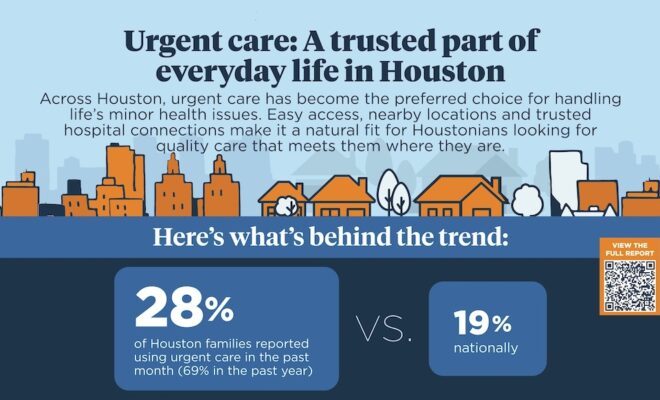
According to new findings from the 2025 Urgent Care Pulse Check Survey, commissioned by Memorial Hermann-GoHealth Urgent Care (conducted by Wakefield Research), 28% of Houston households visited urgent care in the past month, significantly outpacing the national average of 19% – and that’s not all:
- 69% of Houston households visited urgent care in the past year, signaling it has become a their go-to option for treating common illnesses
- 39% say they’re more likely to visit urgent care this year because new centers have opened nearby
- 49% of Houstonians choose urgent care because of low cost or insurance coverage
- 57% of residents seek care at the very first sign of illness, reflecting a proactive health mindset that sets Houston apart from the rest of the country

The findings suggest that for many Houstonians, urgent care is no longer just a backup option; it’s becoming a go-to option for treating common illnesses, minor injuries, seasonal conditions, and other non-emergency health concerns.
As Houston continues to grow, convenient access to trusted healthcare options remains essential. By offering accessible urgent care locations connected to a larger health system, Memorial Hermann-GoHealth Urgent Care helps support the region’s proactive approach to health by providing nearby care for common illnesses, injuries, and non-emergency health needs.
View the results from the 2025 Urgent Care Pulse Check Survey in the infographic below:
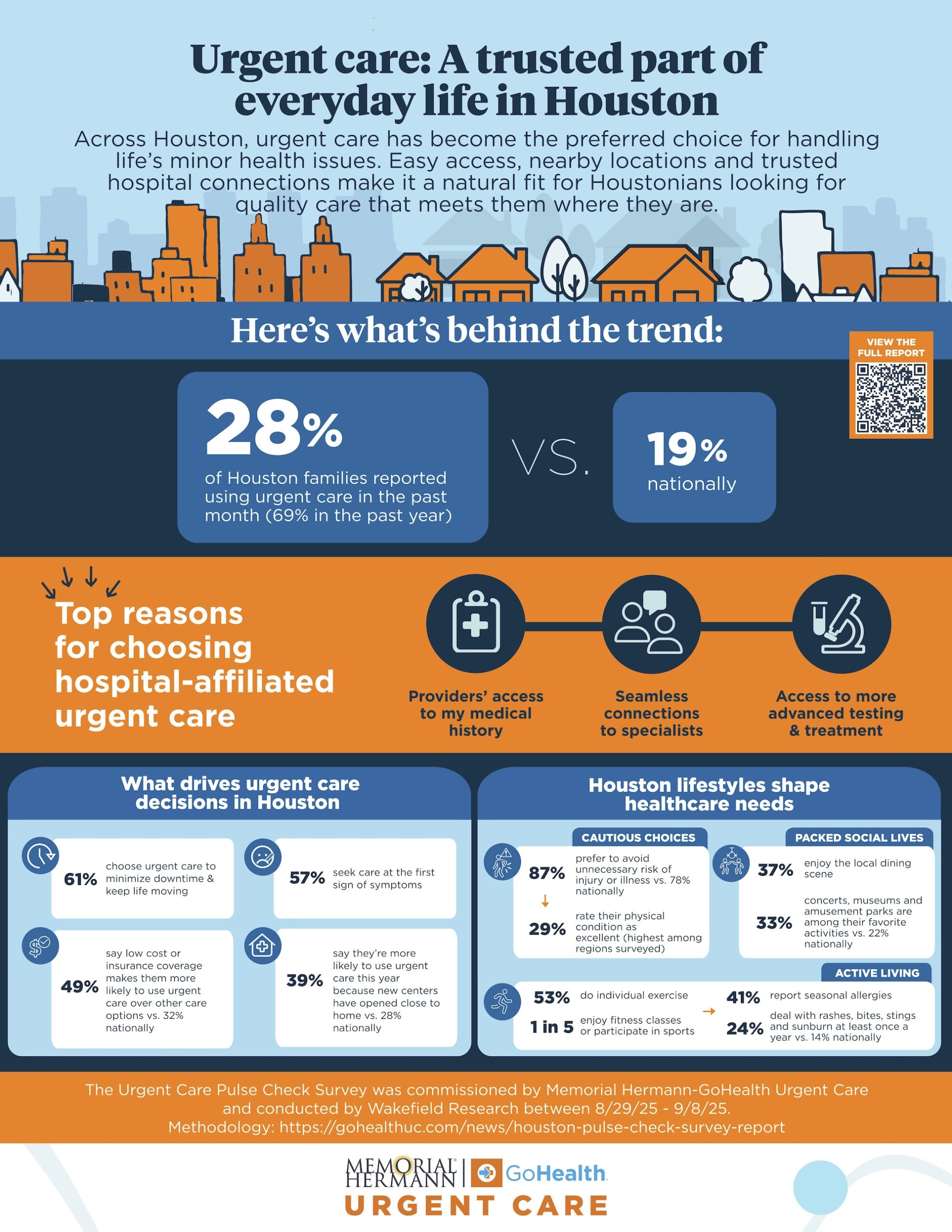
The Urgent Care Pulse Check Survey was commissioned by Memorial Hermann-GoHealth Urgent Care and conducted by Wakefield Research among 2,000 nationally representative U.S. adults and 100 interviews in the Houston DMA, between August 29th and September 8th, 2025, using an email invitation and an online survey. The data has been weighted.
Results of any sample are subject to sampling variation. The magnitude of the variation is measurable and is affected by the number of interviews and the level of the percentages expressing the results. For the interviews conducted in this particular study, the chances are 95 in 100 that a survey result does not vary, plus or minus, by more than 2.2 percentage points for the national sample, and 9.8 percentage points for the Houston DMA, from the result that would be obtained if interviews had been conducted with all persons in the universe represented by the sample.
Read the full article at https://www.gohealthuc.com/news/houston-pulse-check-survey-report.
Source: Memorial Hermann-GoHealth Urgent Care